40 years on: why Rape: My Story still matters — a personal reflection
UPDATE, 1 March:
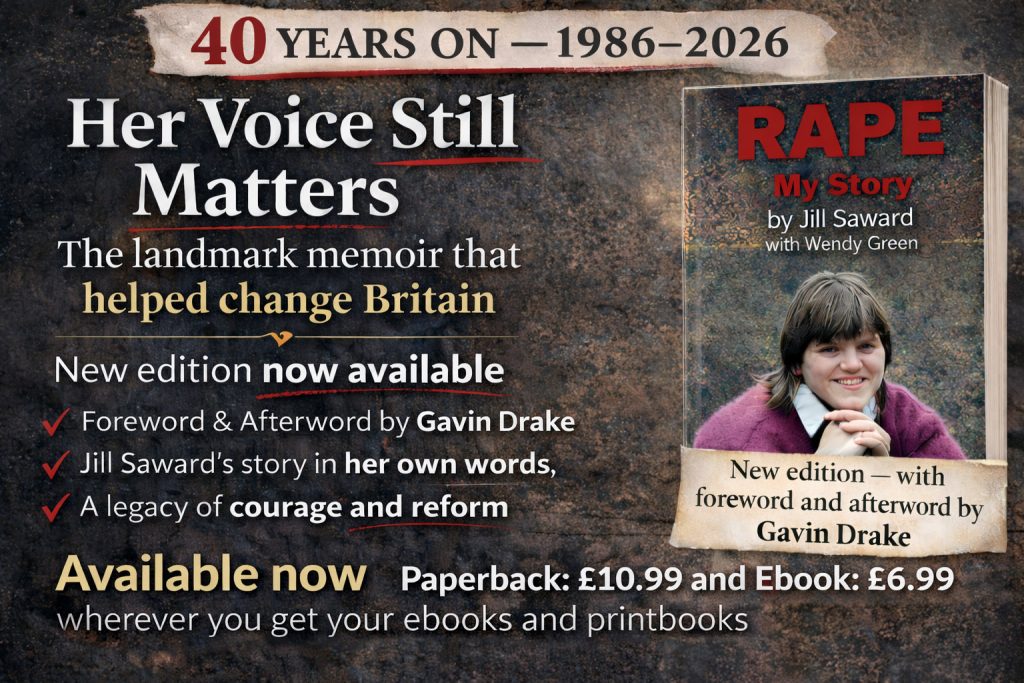
Jill Saward’s “Rape My Story” is now available in paperbacks (£10.99) and ebooks (including Kindle) (£6.99)
Next month marks forty years since the events that changed the life of my late first wife, Jill Saward, and the lives of her family and those who knew them. As well as changing lives, the “Ealing Vicarage Rape” also changed the practice of the press, the law, and society’s attitudes towards sexual violence.
The attack on the Ealing vicarage in 1986 was an act of violence that shocked Britain, and it thrust Jill into a public conversation she never sought. Rape: My Story, first published in 1990, was her attempt to take back some measure of control, to speak in her own words about what happened and how she survived it.
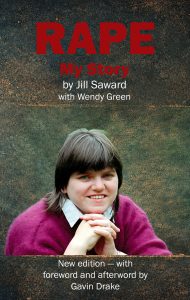
A new edition is being published on 1 March to coincide with the 40th anniversary of the attack and in the run-up to International Women’s Day on 8 March. The new edition preserves Jill’s original text. It now also carries a new foreword and afterword, helping readers understand both the world in which Jill wrote and the world that has grown in the decades since.
On 6 March 1986, four men broke into the family home. Jill’s father, the Revd Michael Saward and her then-boyfrield were beaten in a devastating bout of violence during which Jill, then only 21, was raped. The injuries — physical, emotional, spiritual — were deep and enduring. But the crime did something else too: it forced a deeply private ordeal into the brutal glare of public scrutiny.
In the days, weeks and months — even years — that followed, the Saward family found themselves under relentless media attention. The coverage was overwhelming. When the sentences for the attackers were handed down, the country reacted with outrage, sensing immediately what Jill already knew: the punishment did not fit the crime.
That moment became a turning point. Public anger helped drive real, lasting change. In 1988, the Government introduced the Unduly Lenient Sentence scheme. In 1992, anonymity protections for victims were strengthened. Press regulation tightened in response to what became known as “jigsaw identification,” after enough details were published for people to deduce who Jill was despite the formal anonymity she was entitled to.
Jill eventually made the incredibly brave decision to speak publicly and to be named. At the time, rape survivors were expected to remain silent, hidden, even ashamed. Jill refused that narrative. She believed that the shame belonged to the perpetrators, not to her — not to any survivor. By stepping forward, she changed the way this country talked about rape. She gave others permission to speak.
Rape: My Story, written with Wendy Green, remains a raw and honest account of the assault, the investigation, and the trial. It does not sensationalise. Instead, it reveals the emotional reality of survival — the confusion, the anger, the wrestling with faith, and the painstaking journey towards healing. It is also a record of its time, showing the damaging myths and assumptions that shaped the way rape was understood in the mid‑1980s.
The first edition of the book ended with survival. But Jill’s life, of course, didn’t stop there.
In the decades that followed, she became one of Britain’s most recognised and respected voices on sexual violence. She spoke with police officers, judges, doctors, church leaders, journalists, students — anyone who needed to hear the truth from someone who had lived it. Her own count suggested she trained a number of police officers equivalent to more than 10 per cent of the serving force in England and Wales at the time.
Her message was always clear: language matters; tone matters; time matters. Cultural assumptions influence justice. If our assumptions are flawed, justice will be flawed too.
But Jill’s public advocacy was only one part of her life. She and I met in 1992 and married the following year. She was the devoted mother of our three amazing boys (now men). She lived with significant health challenges, including Ehlers‑Danlos Syndrome, which brought chronic pain and serious complications. She rarely spoke about these struggles publicly, but they shaped her daily life more than most people knew. Through it all, she kept working, kept speaking, kept fighting for others.
On 3 January 2017, Jill collapsed at home after a catastrophic subarachnoid haemorrhage (stroke). She died two days later, aged 51. The tributes that followed came from survivors, police officers, politicians, campaigners, journalists — people from every corner of public life. They remembered not just the crime that first brought her to national attention, but the decades she spent helping to change the way this country understands rape and supports those who endure it.
Forty years after the attack, Britain has changed. The term “rape myths” is widely understood by the criminal justics system — even though the myths persist in wider public perception. Consent is discussed more clearly. Sentences can be challenged. Victims’ anonymity is better protected. And yet, progress is uneven. Reporting and conviction rates shift. Survivors still describe painful, adversarial experiences in the justice system. There is still work to do.
That is why this anniversary edition of Rape: My Story matters. It is a remembrance — of Jill’s courage, her honesty, her determination. And it is a reminder — that the conversation she helped to start is far from finished.
The original text is exactly as she wrote it: immediate, unfiltered, truthful. The new foreword and afterword help place her story in its wider context, showing how much has changed since 1986 — and how much of Jill’s legacy lives on in the fight for justice, dignity, and compassion.
The new edition of Rape My Story, published by CrossWire Books, is available on Amazon.